


The 2026 Measles-Rubella Surge in the Philippines: A Comprehensive Guide for Every Filipino Family
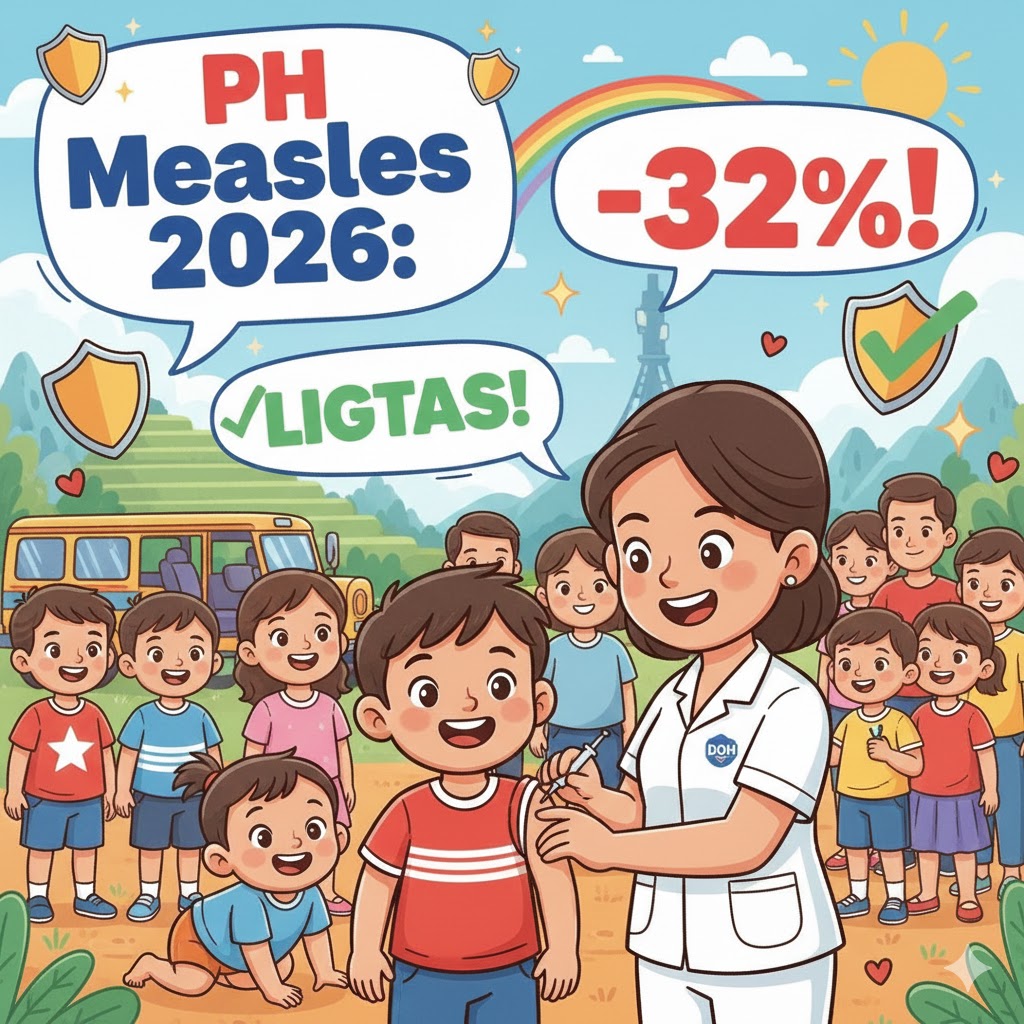
PH Measles 2026 The start of 2026 has brought a sobering reminder of the fragility of public health. According to recent reports from the Department of Health (DOH), the Philippines is currently grappling with a significant resurgence of Measles and Rubella.1 With cases jumping by a staggering 32% over the last year, the nation is at a crossroads.
This rise isn’t just a statistic on a spreadsheet; it represents thousands of children facing preventable illnesses. As the government prepares to launch the “Ligtas-Tigdas” campaign, it is vital for every parent, educator, and community leader to understand the gravity of the situation and the steps needed to protect the next generation.
The Data Behind the Outbreak: Why the 32% Jump Matters
In 2024, the Philippines recorded 3,880 cases of measles and rubella. By the end of December 2025, that number had climbed to 5,123.2 This upward trend is a clear indicator that the “immunity gap”—the portion of the population that lacks protection—is widening.
The DOH report highlights a particularly alarming trend in the final months of 2025. In December alone, 405 new cases were added. This late-year surge suggests that the virus is actively circulating in communities, finding easy targets among the unvaccinated.
Who is Most at Risk?
The most heartbreaking aspect of this data is the age of the victims. Over half of the reported cases—2,567 individuals—involved children under five years old. Even more concerning is that infants as young as six months are being caught in the crossfire.
Statistically, 73% of those who contracted measles were completely unvaccinated. This confirms what health experts have warned about for years: vaccination remains our most powerful, and perhaps only, reliable defense against these viral threats.
Regional Hotspots: Where the Virus is Spreading Fastest
While no province is entirely immune, the current outbreak is heavily concentrated in specific regions, particularly in Mindanao.3 The DOH has identified several “high-incidence” areas where the number of new cases per population is significantly higher than the national average.
Primary Areas of Concern:
-
Zamboanga Peninsula: Reporting some of the highest transmission rates due to dense urban pockets and remote rural areas.
-
Northern Mindanao: A hub of movement that has seen a steady climb in pediatric admissions.
-
Soccsksargen: Including South Cotabato, Sultan Kudarat, Sarangani, and General Santos City.4
-
BARMM (Bangsamoro Autonomous Region in Muslim Mindanao): This region remains a top priority for the DOH due to historically lower vaccination coverage and geographical challenges.
The focus on these areas is strategic. By containing the virus in these hotspots, the health department hopes to prevent a massive spillover into the highly populated corridors of Luzon and the Visayas.
Understanding the Diseases: Measles vs. Rubella
To the untrained eye, measles and rubella might look the same—both involve a red rash and a high fever. However, they are caused by different viruses and carry different long-term risks.
1. Measles (Rubeola)
Measles is one of the most contagious diseases known to man.5 It is spread through respiratory droplets (coughing and sneezing) and can remain active in the air or on surfaces for up to two hours.6
-
Symptoms: High fever, cough, runny nose, red eyes (conjunctivitis), and the characteristic “Koplik spots” (tiny white spots inside the mouth) followed by a full-body rash.
-
Complications: Measles isn’t “just a rash.” It can lead to severe pneumonia, permanent deafness, and encephalitis (swelling of the brain), which can be fatal.
2. Rubella (German Measles)
While the symptoms of rubella are often milder in children, the danger it poses to pregnant women is extreme.7
-
The Risk to Mothers: If a pregnant woman contracts rubella, it can lead to Congenital Rubella Syndrome (CRS).8 This can result in miscarriages or babies born with severe heart defects, blindness, and intellectual disabilities.
Both of these diseases share one commonality: they are vaccine-preventable.
The Government’s Response: The “Ligtas-Tigdas” Program
The DOH isn’t sitting idly by. On January 19, 2026, the government will officially kick off the “Ligtas-Tigdas” nationwide immunization program. This massive undertaking aims to reach 11 million children across the archipelago.9
The Two-Phase Rollout Plan
To manage logistics and prioritize high-risk zones, the campaign is split into two distinct windows:
-
Phase 1 (Beginning Jan. 19): This phase focuses exclusively on Mindanao and BARMM.10 The goal is to vaccinate 2.8 million children in these high-incidence regions immediately.
-
Phase 2 (June 2026): The campaign will shift its focus to Luzon and the Visayas, aiming to reach 5.6 million and 1.9 million children, respectively.11
Why Is There a Delay for Luzon and Visayas?
Many parents in Manila or Cebu might wonder why they have to wait until June. The DOH explained that this allows health workers to concentrate resources where the “fire” is hottest (Mindanao) before moving to prevent the “embers” from catching elsewhere. However, parents in these regions are encouraged to visit their local health centers now if their children are behind on their routine schedules.
Overcoming Vaccine Hesitancy: Facts Over Fear
One of the biggest hurdles in the Philippines remains vaccine hesitancy. Misinformation on social media has, at times, caused parents to fear the vaccine more than the disease itself.
Common Myths vs. Reality
-
Myth: “The vaccine causes the disease.”
-
Reality: The MMR (Measles, Mumps, Rubella) vaccine uses a weakened version of the virus. It teaches the immune system how to fight the real virus without making the child sick.
-
-
Myth: “My child is too young for the vaccine.”
-
Reality: During outbreaks, the DOH often lowers the age for the first dose to 6 months to provide early protection.
-
-
Myth: “Natural immunity is better.”
-
Reality: The “natural” way to get immunity from measles involves risking pneumonia and brain damage. The vaccine provides the same protection without the life-threatening risks.
-
What Should Parents Do Right Now?
The uptick in cases is a call to action. You don’t have to wait for a health worker to knock on your door to take the following steps:
-
Check the Baby Book: Look at your child’s immunization records. Children typically need two doses of the measles-containing vaccine (usually at 9 months and 12 months).
-
Consult Your Health Center: If you missed a dose during the pandemic or due to personal reasons, go to your nearest Barangay Health Center. These vaccines are provided free of charge by the government.
-
Monitor for Symptoms: If your child develops a fever and a rash, isolate them immediately and contact a healthcare provider. Do not bring them to crowded public spaces where the virus can spread.
-
Spread Awareness: Talk to your neighbors and family members. Sometimes, a hesitant parent just needs a bit of encouragement from a trusted friend to make the right choice.
A Call for National Unity in Health
The 32% rise in measles and rubella cases is a challenge that requires more than just government intervention. it requires a “Bayanihan” spirit. When we vaccinate our children, we aren’t just protecting our own homes; we are protecting the neighbor’s newborn baby, the elderly grandmother down the street, and the pregnant mother at the market.
The “Ligtas-Tigdas” campaign is our chance to reset the clock and reclaim the progress we’ve made in public health. Let’s ensure that by the end of 2026, the headlines aren’t about rising cases, but about a nation that successfully protected its most vulnerable citizens.
Your child’s health is in your hands. Visit your local health center today and be a part of the solution.
Key Statistics Summary Table
| Metric | 2024 Data | 2025 Data | Percentage Change |
| Total Reported Cases | 3,880 | 5,123 | +32% |
| Cases in Children < 5yrs | N/A | 2,567 | High Risk |
| Unvaccinated Percentage | N/A | 73% | Critical Gap |
| Vaccination Goal12 | –13 | 11 Million14 | Nationwide Target15 |
One thought on “Measles Rubella Cases Rise 32%: Is Your Child Safe this 2026?”