Heading South? Canada Issues Urgent Travel Warning for the United States for 2026
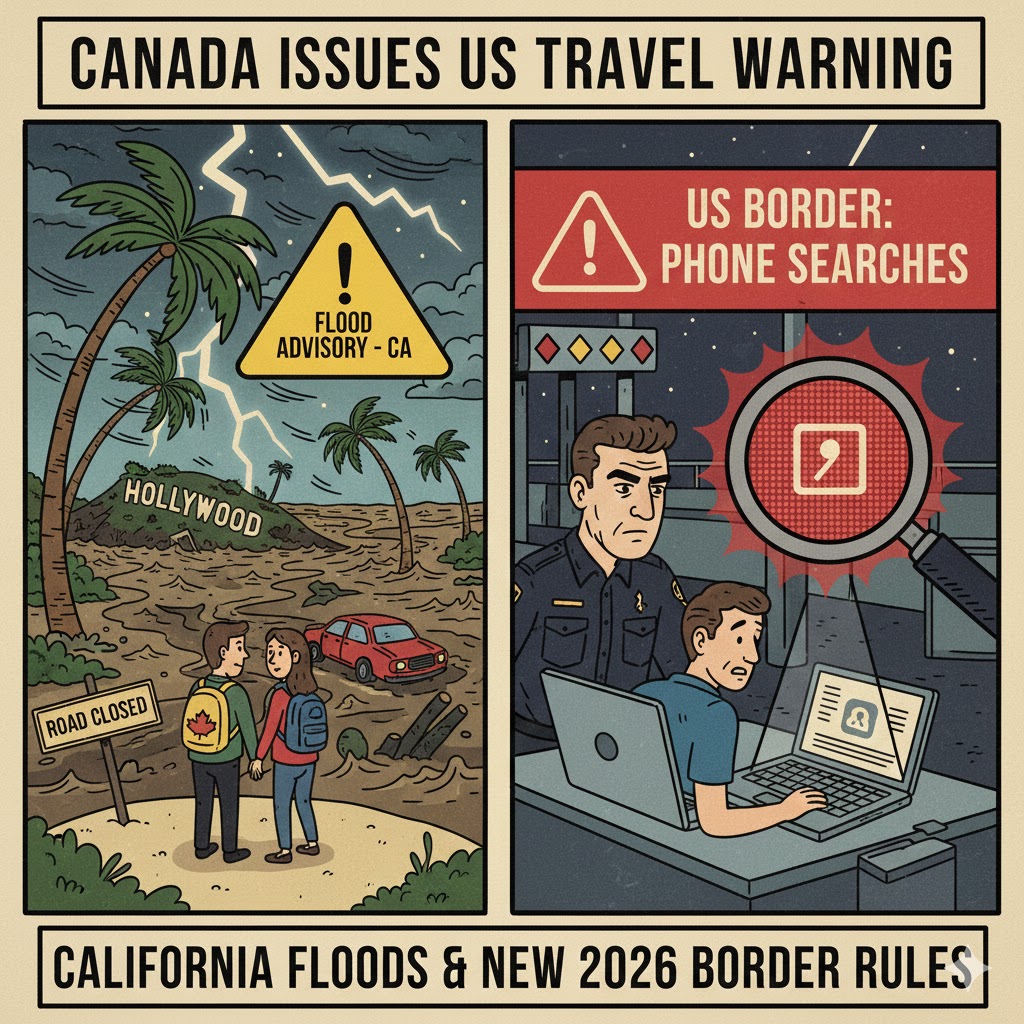
Canada US Travel Warning 2026 : For many Canadians, a trip south of the border is a classic way to ring in the New Year. Whether it is chasing the California sun or visiting family, the U.S. remains the top destination for winter getaways. However, if you have plans to head to the Golden State this week, you might want to double-check your itinerary. Global Affairs Canada has officially updated its travel advisory, citing a “State of Emergency” in California that could significantly impact your travel plans.
Between historic flooding in Los Angeles and strict new border protocols for 2026, there is a lot for Canadian travelers to digest before they pack their bags.
California Under Water: The Christmas Eve Emergency
The holiday season in California has been anything but a “dry” winter. On December 24, 2025, several counties in the state declared a State of Emergency following a relentless series of storms. These heavy rains triggered severe flooding and landslides, turning scenic highways into hazardous zones.
According to the National Weather Service, downtown Los Angeles recently experienced its wettest Christmas season in 54 years. While the rain provided a temporary break, meteorologists are sounding the alarm for New Year’s Eve. Another major system is expected to hit on December 31, bringing the threat of more rockslides, mudslides, and flash flooding.
Which Counties are Affected?
If your travel plans include Southern California or parts of the North, take note. The emergency declaration specifically covers the following counties:
-
Los Angeles
-
Orange County
-
Riverside
-
San Bernardino
-
San Diego
-
Shasta
Global Affairs Canada warns that in these regions, essential services could be disrupted without much notice. This includes potential outages in power and water, disruptions to food supplies, and delays in telecommunications. Most importantly, access to medical care and emergency services might be restricted in areas where roads have been washed away.
Safety Advice for Canadians Currently in California
If you are already in one of the affected counties, your safety should be your top priority. Wildlife and local authorities are urging everyone to exercise extreme caution. Here are the steps you should take:
-
Monitor Local News: Keep a battery-powered radio or a fully charged phone handy to stay updated on weather alerts.
-
Avoid Flooded Roads: It only takes a few inches of moving water to sweep a car away. Never attempt to drive through flooded areas.
-
Follow Evacuation Orders: If local authorities tell you to leave, do so immediately. Do not wait for the weather to worsen.
-
Stay in Touch: Ensure your family back in Canada knows your location and your emergency plan.
Beyond the Weather: New Border Scrutiny for 2026
While the flooding is an immediate concern, there are other updates to the United States travel advisory that Canadians need to be aware of as we enter 2026. Traveling across the border is becoming a more digital experience, and with that comes increased scrutiny.
The “Electronic Device” Search Rule
One of the most critical points in the new advisory involves the search of electronic devices at ports of entry. Whether you are flying into a major hub or driving across a land border, U.S. border agents have the authority to search your laptops, cellphones, and tablets.
What you need to know:
-
No Reason Required: Agents do not need to provide a specific reason or “probable cause” to request your password.
-
Biometric Access: You may be asked to provide your fingerprint or use facial recognition to unlock your smartphone.
-
Consequences of Refusal: If you refuse to provide access, authorities have the right to seize your device. Furthermore, if you are not a U.S. citizen, you could be delayed significantly or even denied entry into the country.
Protection Tip: Airplane Mode
To protect your privacy and ensure that “remote files” are not accidentally downloaded or accessed during a search, the Canadian government officially advises travelers to put their devices in Airplane Mode before reaching the border. This simple step keeps your cloud-stored data separate from the local files stored physically on your device.
Preparing for a 2026 Trip: A Checklist for Canadians
Traveling in 2026 requires a mix of environmental awareness and digital preparedness. Before you head to the airport or hit the I-5, consider this checklist:
-
Check Travel Insurance: Ensure your policy covers “Acts of God” or natural disasters like flooding and mudslides.
-
Download Offline Maps: If cell towers go down in California, having offline maps of your area will be a lifesaver.
-
Clean Your Devices: If you are concerned about privacy, consider traveling with a “clean” device that contains only the essential documents for your trip.
-
Register as a Canadian Abroad: This allows the government to notify you in case of an emergency at your destination.
Conclusion
Canada’s latest travel warning serves as a reminder that even familiar destinations like the United States can present unexpected challenges. By staying informed about the weather in California and understanding your rights (and the rules) at the border, you can ensure your 2026 travels are safe and stress-free.
Nature may be unpredictable, but your preparation doesn’t have to be. Stay safe, stay dry, and keep a close eye on the updates as the New Year approaches.
https://gujaratitourister.in/2026/01/02/montreal-new-year-2026-opening-hours-transit/